

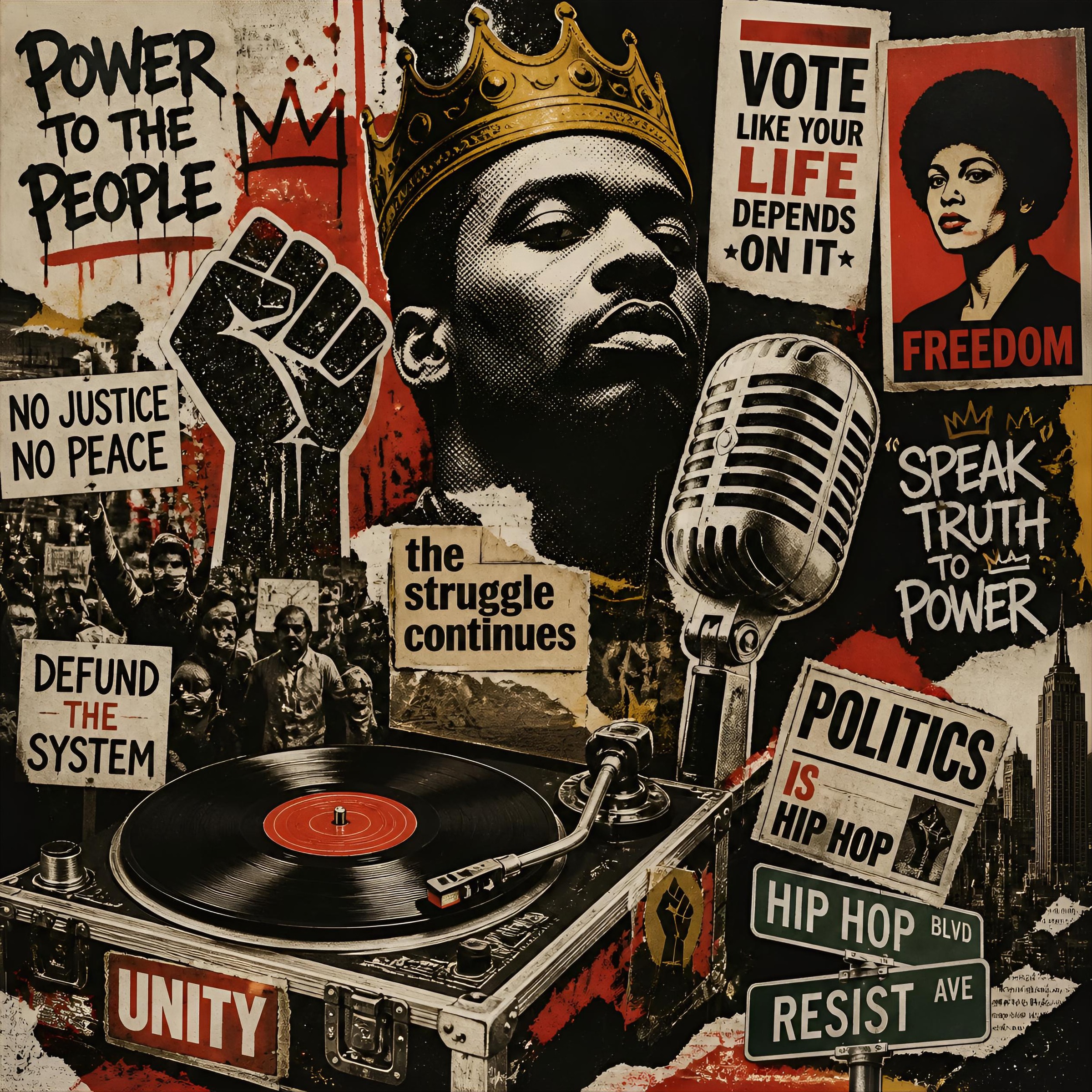

“History doesn’t repeat itself, but it often rhymes.” The saying, commonly attributed to Mark Twain, captures something particularly interesting about the way culture and politics intersect. The names change. The circumstances change. The language changes. But the patterns have a familiar rhythm. Hip-hop, perhaps more than any other modern cultural movement, understands that rhythm. Born from communities creating something powerful out of limited resources, hip-hop became a vehicle for storytelling, identity, resistance and social commentary. It gave people a microphone when institutions weren’t necessarily interested in giving them a seat at the table.
Yet hip-hop was never put elected officials in the forefront. Its political roots were about people speaking for themselves — not politicians borrowing pieces of the culture to speak to or on behalf of them. And that distinction becomes important when cultural references begin appearing in political performances. A lyric here. A song there. A carefully selected phrase that signals familiarity with a demographic that may otherwise view an elected official as disconnected. Music is universal, and politicians have understood the play for generations that music can make them appear more relatable, personable and human. But when does appreciation become performance? And what happens when someone reaches into a culture for its language, imagery and credibility without necessarily carrying the weight of the experiences that created it?
The Yearn to “Want to Be Down”
There is an undeniable political value in appearing culturally relevant. The yearn to “want to be down” can be powerful. It creates the perception of kinship: For communities that have historically been ignored, that kind of recognition can feel meaningful. It can create an opening for conversations, promises and relationships that might not otherwise exist. But the real test comes after the campaign and photo opportunity. Are those communities still being heard? Are those promises still being remembered? Or was the cultural connection simply a bridge used to get across the political river?
This becomes especially complicated when politicians borrow elements of marginalized cultures while simultaneously positioning themselves as the marginalized figure in the room. Building the mirage of seemingly relating to the marginalized to build trust and align as kin, as if their struggles are your own, when they are not is a selfish danger. A controversial remark, criticism or political disagreement can suddenly become a story about them — their persecution, their courage, their willingness to say what others won’t. The language of resistance gets repurposed. And suddenly, the person holding institutional power is presented as though they are the one standing outside of it. That is where the rhyme becomes worth examining. Hip-hop has always understood the difference between having a voice and performing a voice.
There is nothing inherently wrong with elected officials loving music, quoting artists or finding common ground through popular culture; authentic cultural engagement can be a powerful way to build relationships. But authenticity cannot be reduced to lyrics. It cannot be manufactured by borrowing the language of communities whose struggles are useful when building relatability but inconvenient when those same communities ask for accountability. Hip-hop gave us the rhythm, the rhyme and the language to recognize when something sounds familiar but isn’t authentic. Politics would do well to listen.