

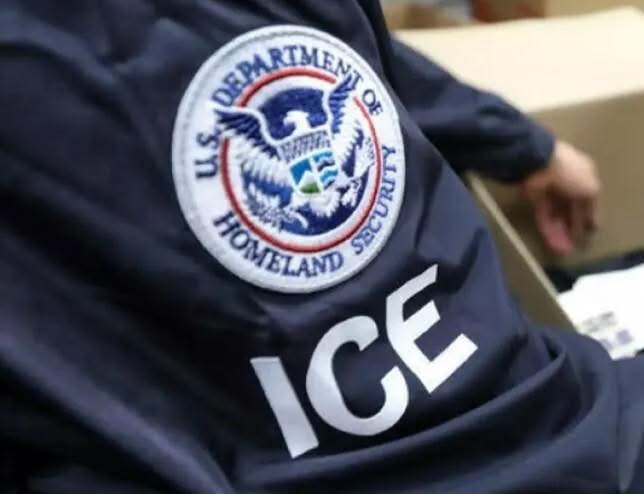

Frederick County is experiencing one of its most intense periods of federal immigration enforcement in recent years, prompting renewed organizing, expanded community defense efforts, and growing calls to end Maryland’s remaining 287(g) agreements. Advocates say the rise in ICE activity has left immigrant families fearful, fragmented, and urgently seeking information, support, and legal protection.
A Summer of Fear: “ICE Is Everywhere”
Since late spring, Frederick’s rapid-response network has documented a wave of ICE operations across the county. Reports describe plainclothes officers conducting arrests:
- outside 7-Eleven stores,
- at a Megamart on Route 26,
- the Ballenger Creek Burger King,
- Wawa locations,
- on construction sites, and
- on roadsides.
Advocates say many of those detained have no criminal record at all—a trend echoed statewide. According to data reported by the Baltimore Banner in July, since a surge in ICE arrests began on May 21,
72% of Marylanders taken into ICE custody had never been convicted of a crime, and
58% had never been charged.
Why Frederick Feels It Hardest
Although the City of Frederick Police Department does not cooperate with ICE, the county system still funnels people into federal hands.
Frederick City does not operate its own jail. Anyone arrested by city police—whether for a traffic violation or a minor civil offense—is taken to the Frederick County Detention Center, where every individual is questioned about immigration status under the Sheriff’s 287(g) agreement with ICE.
Community organizers point to this pipeline as the reason why about 60% of people deported through 287(g) were originally arrested inside Frederick City limits, despite the city’s stated opposition to immigration raids.
June 18: A Turning Point
On June 18, more than 100 residents mobilized to the Sheriff’s annual public meeting with ICE. The crowd included RISE volunteers, the ACLU of Maryland, CASA de Maryland, and advocates from Washington and Carroll Counties.
Participants pressed Sheriff Charles “Chuck” Jenkins on:
- rising deportations of non-criminal residents,
- the county’s reliance on ICE within the detention center,
- and his refusal to rule out adopting a “task force” model, which would allow deputies to question people about immigration status during ordinary street encounters.
According to witnesses, Jenkins also acknowledged that he does not control whom ICE ultimately takes—stating that even a U.S. citizen could theoretically be detained, and “that would be out of my hands.”
Families Caught in the Middle
Throughout the summer and fall, stories circulated of local residents swept into the federal system. Among them:
- Alexi Cañas, a Frederick resident arrested on a suspended license, now detained by ICE.
- Kilmar Abrego García, of Prince George’s County, previously sent to the notorious CECOT mega-prison in El Salvador, who returned to the U.S. and is again facing deportation.
Community Defense: Know Your Rights, Not Fear
With fear growing, RISE supporters have expanded Know Your Rights education across the county—distributing materials in stores, churches, businesses, and at community events. Volunteers emphasize the basics:
- Do not open the door to ICE without a warrant signed by a judge.
- You have the right to remain silent.
- You have the right to ask for documentation.
- Families should prepare emergency contacts, childcare plans, and powers of attorney.
Residents can report ICE activity to CASA’s hotline at 1-888-214-6016.
Local updates are posted through the RISE Coalition of Western Maryland Facebook page and Centro Hispano’s channels.
Maryland’s Legislative Fight Ahead
At the December Frederick County Legislative Delegation forum, public testimony overwhelmingly called for ending 287(g) statewide.
City Councilmember Cesar Díaz warned lawmakers that immigrant residents are now afraid to report crimes, fearful that any police interaction—even as a victim—could lead to deportation through the county jail.
Maryland currently has three remaining 287(g) counties: Frederick, Cecil, and Harford. Advocates fear that under federal pressure, the number could grow unless legislation prevents new agreements.
For 2026, immigrant-rights groups—including RISE, CASA, and the ACLU—plan coordinated pressure on the Maryland General Assembly to ban 287(g) entirely and prevent future local–federal immigration enforcement partnerships.
A County at a Crossroads
As 2025 ends, Frederick stands between two competing systems: a city government seeking to build trust with immigrant residents, and a county sheriff’s office collaborating directly with ICE. For families caught in the middle, every drive to work, trip to the store, or walk down the street now carries uncertainty.
But advocates say the community’s resilience is just as clear as its fear.